

Lemon and Sugar Pancakes
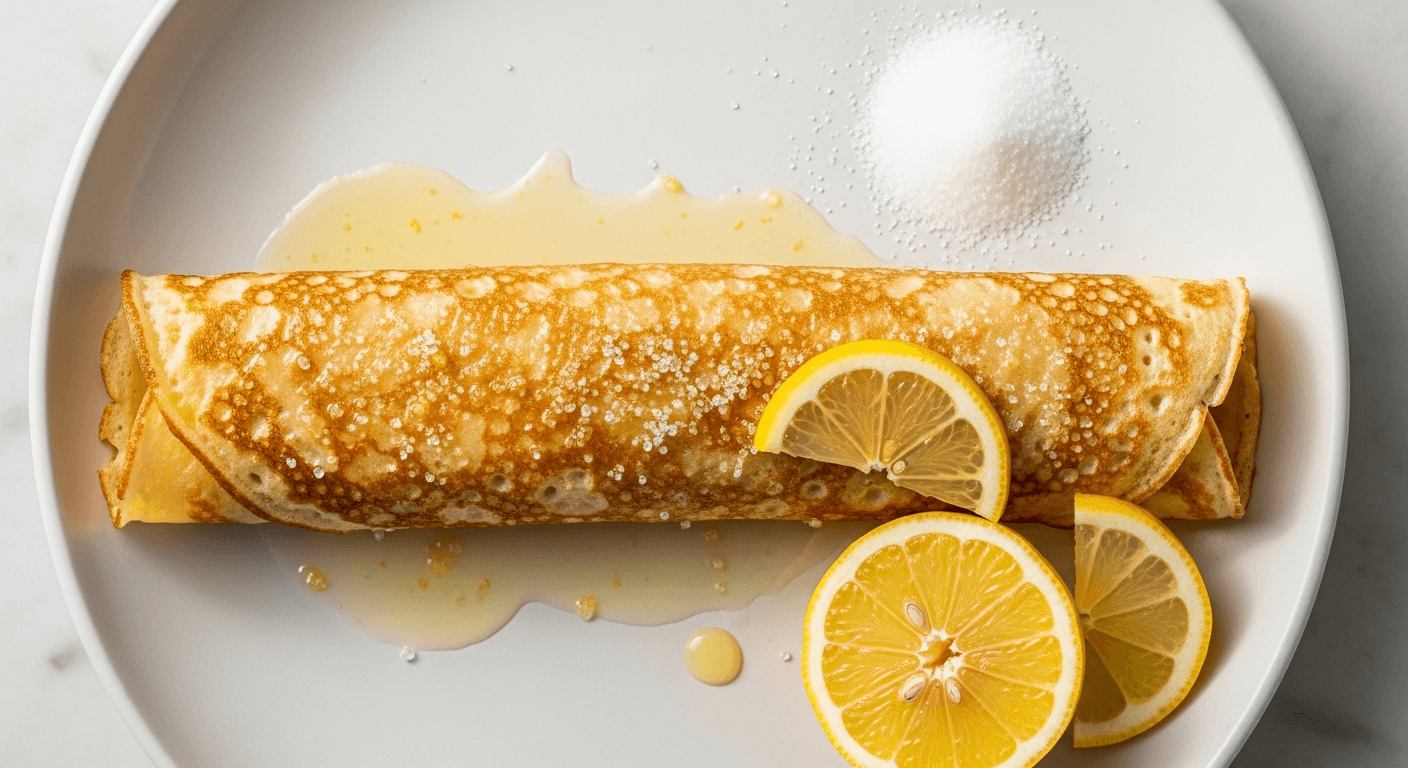
The combination of sharp lemon juice and fine caster sugar on a warm rolled pancake is one of the simplest things you can make and one of the best. The acidity cuts through the egg richness of the batter; the sugar melts into a glaze at the edges. There is nothing to improve here. Make the batter, get your pan hot, and do not fiddle with it.
Ingredients
- 125g (4½oz)plain flour, sifted
- 300ml (10fl oz)whole milk
- 1large egg, at room temperature
- 25g (1oz)unsalted butter, melted, plus a little extra for the pan
- a pinchfine salt
- 4 tbspcaster sugar, about 50g - fine crystals melt faster than granulated
- 1unwaxed lemon, juiced
Method
- 1
Sift the flour into a large bowl and make a well in the centre. Crack in the egg, add a pinch of salt, and pour in about a third of the milk.
- 2
Whisk from the centre outwards, gradually drawing in the flour from the edges. Add the remaining milk in two stages, whisking between each addition, until you have a smooth, thin batter about the consistency of single cream.
- 3
Stir in the melted butter. Rest the batter for 20 minutes if you can - the flour hydrates and the pancakes come out more tender. If not, carry on immediately.
- 4
Before you start cooking, set out a bowl of caster sugar and the halved lemon next to the hob. The sugar goes on while the pancake is warm enough to slightly melt it - you do not want to be searching for these once the pancake is in your hand.
- 5
Heat a non-stick frying pan (20-22cm) over medium-high heat. Add a tiny knob of butter and swirl to coat. When the foam subsides, the pan is ready.
- 6
Pour in just enough batter to coat the base in a thin, even layer, tilting the pan immediately as you pour. Cook for about 1 minute until the edges are dry and the underside is golden and beginning to lift.
- 7
Flip the pancake - either with a palette knife or a confident wrist flick - and cook for a further 30 seconds. Slide onto a warm plate.
- 8
Sprinkle a tablespoon of caster sugar evenly across the warm pancake, then squeeze lemon juice over from a height for even coverage. Roll the pancake tightly and eat immediately. Repeat with the remaining batter.
Pro Tips
- →Sugar goes on before the lemon. It needs the heat of the warm pancake to begin melting. Add lemon first and the sugar slides straight off.
- →Use an unwaxed lemon and squeeze from a height - it gives more even coverage across the whole pancake.
- →Eat each pancake the moment it is rolled. Lemon and sugar pancakes wait for no one.
- →Fine caster sugar works much better than granulated here - the crystals are smaller and dissolve faster on contact with the warm surface.
- →The first pancake is a temperature test. Pale and thick means the pan needs more heat; dark and spotted means turn it down slightly.
Topping Ideas
Learn More
Terms in this recipe
Defined in the Pancake Day glossary.
Questions & answers
What is the difference between caster sugar and granulated sugar on pancakes?⌄
Can I make the batter the night before?⌄
Why do my pancakes tear when I try to roll them?⌄
Advertisement
Get the Full Pancake Day Plan
Recipes, the plan and a shopping list, counting down to Pancake Day.
No spam. Unsubscribe any time.