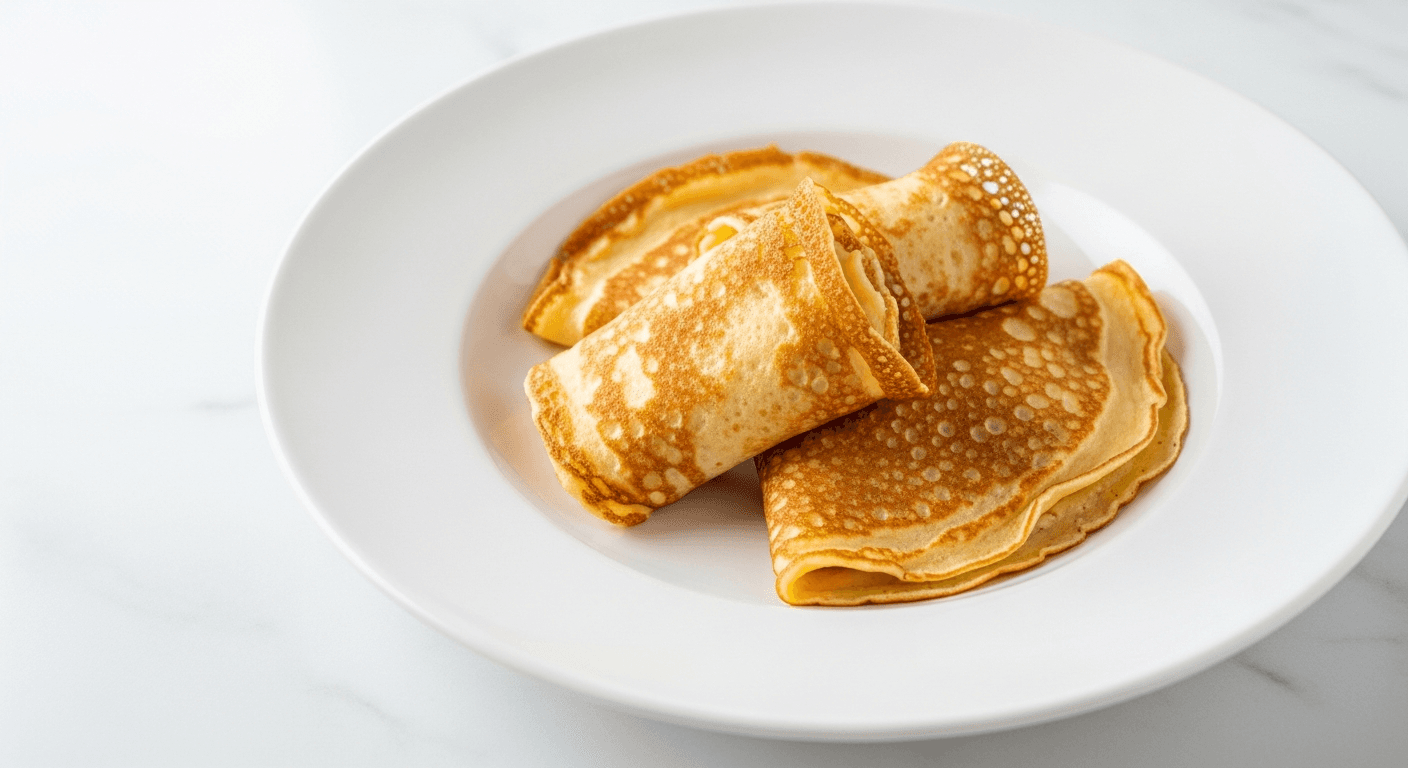


Mexican Hotcakes
Across Mexico, hotcakes are a street-breakfast staple - scented with vanilla and cinnamon, cooked on a dry comal, and served with honey, cajeta, or piloncillo syrup. This recipe captures that warm, aromatic quality that makes Mexican hotcakes distinctly their own, even though the base is the same American pancake they evolved from.

Ingredients
- 240g (1¾ cups)plain flour
- 2 tspbaking powder
- ½ tspbicarbonate of soda
- 3 tbsppiloncillo or soft dark brown sugar, Piloncillo gives the most authentic flavour; dark brown sugar is a good substitute
- ½ tspground cinnamon
- ½ tspfine salt
- 300ml (1¼ cups)whole milk
- 2 largeeggs
- 50g (3½ tbsp)unsalted butter, melted
- 1½ tspvanilla extract, Use a good-quality vanilla - it is prominent in the flavour
Method
- 1
Whisk together the flour, baking powder, bicarbonate of soda, sugar, cinnamon, and salt in a large bowl.
- 2
In a jug, whisk the milk, eggs, melted butter, and vanilla until combined.
- 3
Pour the wet ingredients into the dry and stir with a few gentle strokes until just combined. Do not overwork - lumps are fine.
- 4
Heat a comal or dry non-stick pan over medium heat. Mexican hotcakes are traditionally cooked without added butter or oil; the dry surface gives a characteristic slightly matte finish.
- 5
Pour approximately 80ml (⅓ cup) of batter per hotcake. Cook until bubbles appear across the surface and the edges look set, about 2-3 minutes.
- 6
Flip once and cook for a further 1-2 minutes until golden underneath.
- 7
Serve immediately with honey, fruit jam, cajeta, or piloncillo syrup (see tip below).
Pro Tips
- →Piloncillo (raw Mexican cane sugar, sold in solid cones) has a rich, slightly smoky molasses flavour that brown sugar can approximate but not fully replace.
- →The cinnamon-vanilla combination is the defining characteristic of Mexican hotcakes - do not reduce either.
- →Street vendors in Mexico often cook these on a very large, well-seasoned comal without any oil; a well-seasoned cast-iron pan achieves a similar effect.
Topping Ideas
Learn More
Questions & answers
Why are they called hotcakes in Mexico?⌄
What is piloncillo?⌄
Can I use a regular frying pan instead of a comal?⌄
Advertisement
Get the Full Pancake Day Plan
Recipes, the plan and a shopping list, counting down to Pancake Day.
No spam. Unsubscribe any time.