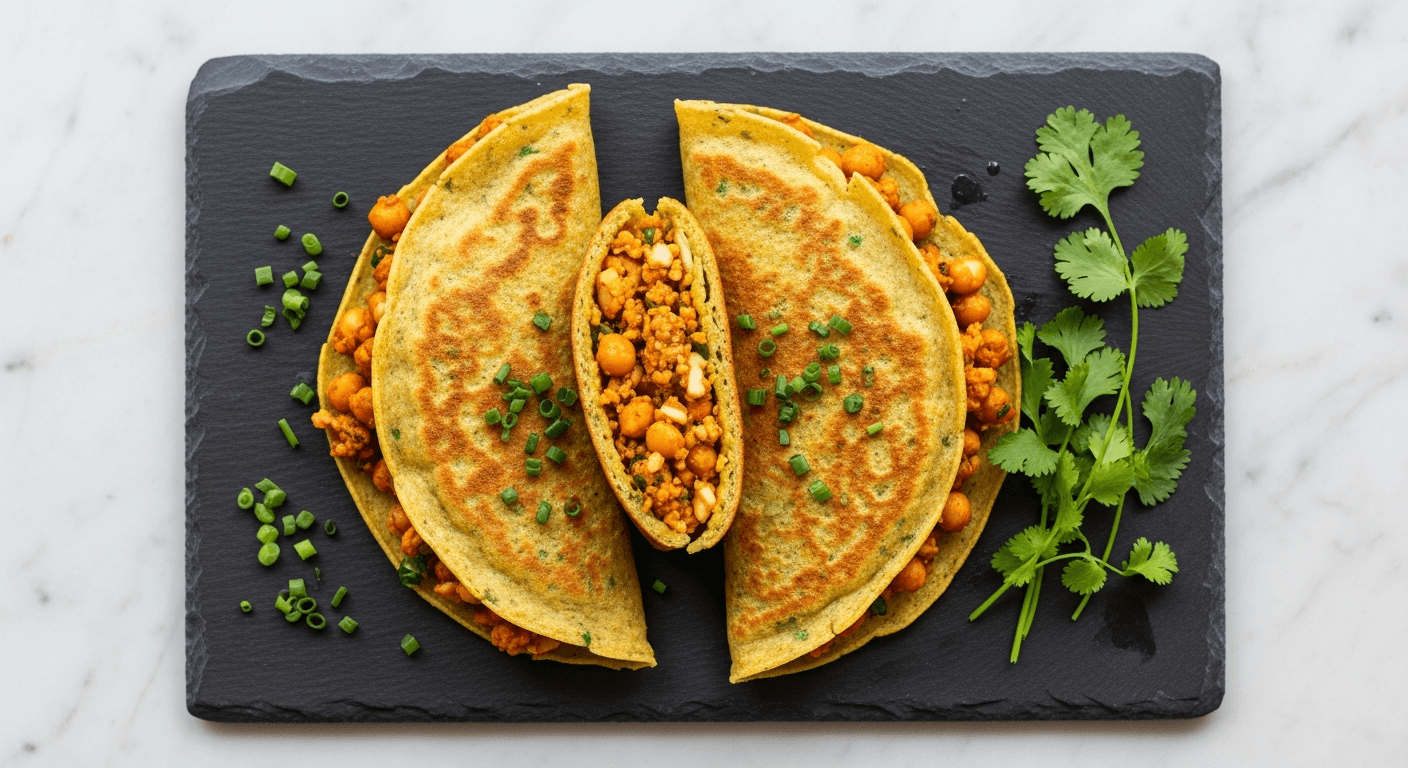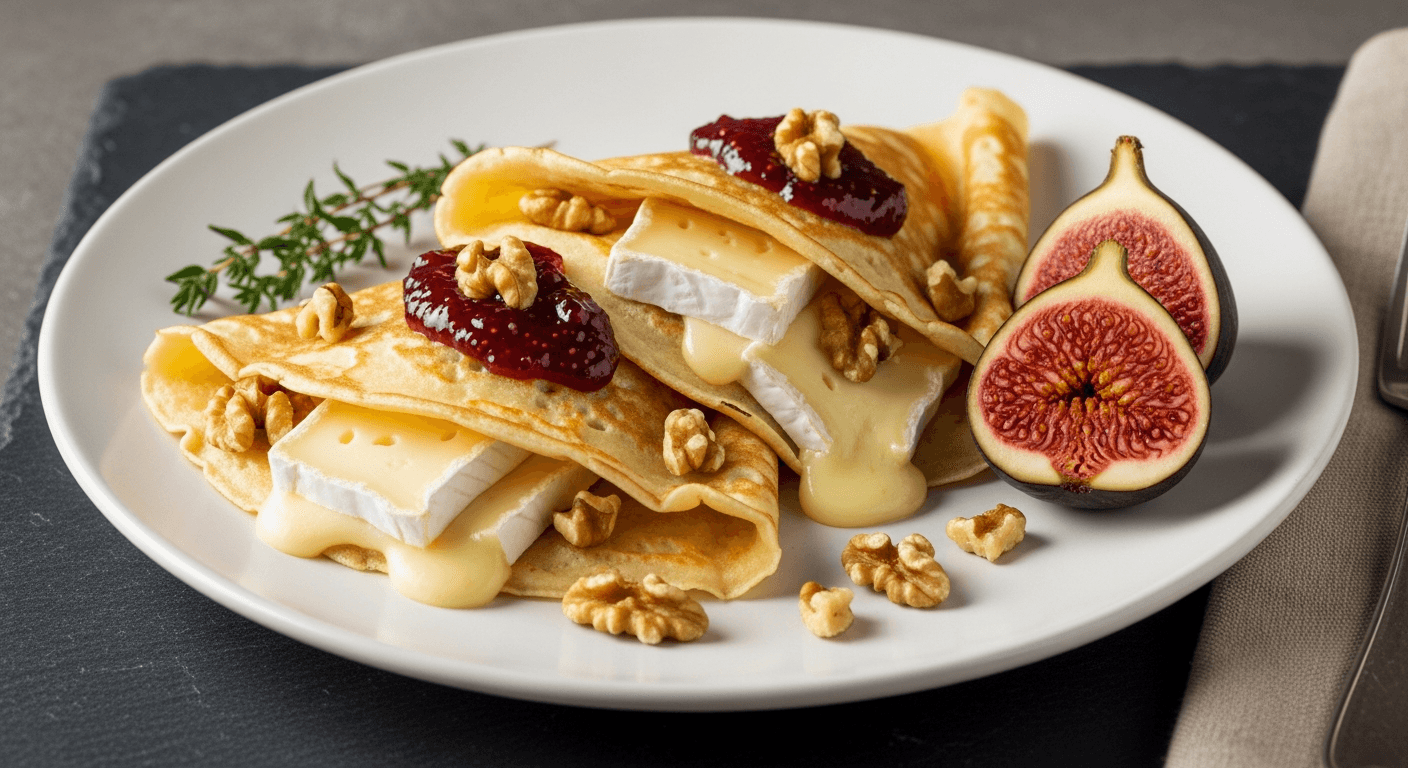


Korean Pajeon (Scallion Pancakes)
Pajeon are Korean savoury pancakes held together almost entirely by spring onions. The batter - plain flour, one egg, and cold water - is thin enough to make a crispy, lacy edge while the scallion stalks keep their bite inside. Served with a sharp soy and sesame dipping sauce, they are street food in Seoul and a capable weeknight dinner everywhere else. Once you understand the batter logic - thin, cold, not overworked - the technique applies to any jeon variation.

Ingredients
- 120g (4.25oz)plain flour, sifted
- 150ml (5fl oz)cold water, cold from the tap - keeps the batter light and crispy
- 1large egg
- 0.5 tspfine salt
- 200g (8-10 stalks) (7oz (8-10 stalks))spring onions (scallions), trimmed, cut into 6cm lengths
- 4 tbspvegetable or sunflower oil, for frying - be generous
- 3 tbspsoy sauce, for the dipping sauce
- 1 tbsprice vinegar, for the dipping sauce
- 1 tsptoasted sesame oil, for the dipping sauce
- 1 tspcaster sugar, for the dipping sauce
- 0.25 tspdried chilli flakes, for the dipping sauce, optional
- 0.5 tsptoasted sesame seeds, for the dipping sauce and to garnish
Method
- 1
Mix the dipping sauce first: whisk together the soy sauce, rice vinegar, sesame oil, sugar, chilli flakes, and sesame seeds in a small bowl. Set aside.
- 2
Whisk flour, egg, cold water, and salt in a mixing bowl until just combined. A few small lumps are fine - do not overmix. The batter should pour thinly, like single cream.
- 3
Add the spring onion pieces and fold gently into the batter until evenly distributed.
- 4
Heat a wide non-stick frying pan (about 26cm) over medium-high heat. Add 2 tbsp oil and swirl to coat the base fully.
- 5
Pour half the batter into the pan, spreading the spring onions out to fill the base evenly. Press down lightly with a spatula.
- 6
Cook undisturbed for 3-4 minutes until the underside is deep golden and the edges look set. Drizzle another tablespoon of oil around the edges if the pan looks dry.
- 7
Flip carefully using a wide spatula. Cook for 2-3 minutes on the second side until crispy and golden.
- 8
Slide onto a board, cut into wedges, and serve immediately with the dipping sauce. Repeat with the remaining batter for a second pancake.
Pro Tips
- →Cold water slows gluten development and produces a crispier result - warm water makes the pancake chewier.
- →Use more oil than seems necessary. Pajeon should fry, not steam; a well-oiled pan gives the characteristic crispy edge.
- →The spring onions are the filling, not a garnish - they should fill the entire batter rather than sitting in the middle.
Topping Ideas
Learn More
Terms in this recipe
Defined in the Pancake Day glossary.
Questions & answers
What are pajeon?⌄
What is the difference between pajeon and other Korean jeon?⌄
Why does pajeon batter use cold water?⌄
Can you make pajeon without egg?⌄
What dipping sauce goes with pajeon?⌄
How crispy should pajeon be?⌄
Can you reheat pajeon?⌄
Is pajeon vegetarian?⌄
Advertisement
Get the Full Pancake Day Plan
Recipes, the plan and a shopping list, counting down to Pancake Day.
No spam. Unsubscribe any time.