Scotch Pancakes (Drop Scones)
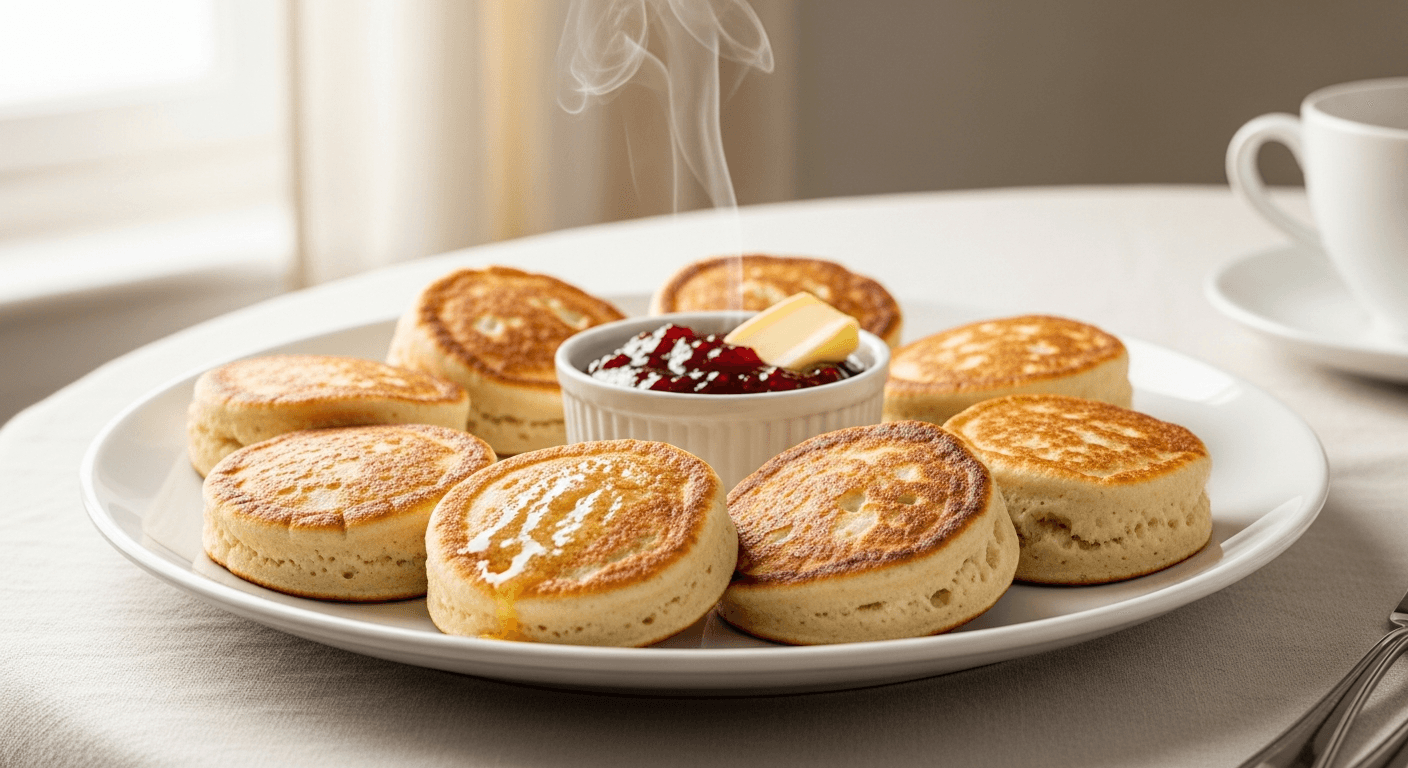
Scotch pancakes are the thick, pillowy little cakes that distinguish British griddle cooking from the thin crêpe-style pancake most people associate with Pancake Day. About the size of a digestive biscuit, golden on both sides, and soft enough to split apart with a fork - they are a classic of Scottish and British afternoon tea, equally at home on a breakfast plate. The batter takes five minutes to mix; each batch cooks in under ten. Call them Scotch pancakes south of the border, drop scones anywhere, or girdle scones if you are being properly Scottish.
Ingredients
Some ingredient links earn us a small commission - costs you nothing. Details.
- 200g (1½ cups)self-raising flour
- 2 tbspcaster sugar
- ¼ tspfine salt
- 2large eggs
- 150ml (⅔ cup)whole milk
- 20g (1½ tbsp)unsalted butter, melted, plus extra for the pan
Method
- 1
Sift the flour into a large bowl with the sugar and salt. Make a well in the centre.
- 2
Break the eggs into the well and add half the milk. Beat from the centre outwards until you have a smooth, thick batter. Add enough of the remaining milk to give a batter that drops slowly from a spoon rather than running freely - you may not need it all.
The batter should be noticeably thicker than a crêpe batter. If it pours freely, it is too thin - add a little extra flour. - 3
Heat a large heavy-based frying pan or flat griddle over medium heat. Brush lightly with melted butter - the surface should be barely greased.
- 4
Drop heaped dessertspoon-sized rounds of batter onto the pan, spacing them well apart. Cook until bubbles appear across the entire surface and the edges look set and dry - about 2 minutes.
Do not try to move them before the bubbles form - the pancakes will tell you when they are ready to flip. - 5
Flip once and cook for a further 1-1½ minutes until the underside is evenly golden.
- 6
Transfer to a folded clean tea towel - covering them traps steam and keeps them soft. Repeat with the remaining batter, greasing the pan lightly between batches.
- 7
Serve warm with butter and jam, clotted cream, or golden syrup.
Pro Tips
- →The batter should be thick enough to hold a gentle mound when dropped from a spoon - if it spreads immediately into a thin pool, add a tablespoon more flour.
- →Keeping cooked drop scones wrapped in a clean tea towel while you finish the batch is not optional: it traps steam and keeps them soft rather than turning them dry and leathery.
- →Medium heat, not high - too hot and the outside browns before the centre has time to cook through.
Topping Ideas
Learn More
Terms in this recipe
Defined in the Pancake Day glossary.
Questions & answers
What is the difference between Scotch pancakes and regular pancakes?⌄
What is the difference between drop scones and Scotch pancakes?⌄
Why are they called drop scones?⌄
Can I use plain flour instead of self-raising flour?⌄
Do Scotch pancakes need to rest before cooking?⌄
How do I keep drop scones warm while I cook the batch?⌄
Can I freeze Scotch pancakes?⌄
Advertisement
Get the Full Pancake Day Plan
Recipes, shopping list, and tips - delivered the week before Pancake Day.
No spam. Unsubscribe any time.